Persistent insomnia is not rare or trivial, and in 2026 we know that about 12% of Americans are living with a diagnosis of chronic insomnia, which means millions of people are struggling every night with a condition that affects their heart, mood, and daily functioning.
Choosing a professional sleep clinic that understands chronic insomnia, uses cognitive behavioral therapy for insomnia (CBT‑I), and offers a clear, patient‑centered pathway is one of the most effective steps you can take toward consistently better sleep.
Key Takeaways
| Question | Short Answer |
|---|---|
| 1. Where can I find top sleep clinics for chronic insomnia in 2026? | Use national directories like SleepClinics.info to locate accredited sleep centers that list insomnia and CBT‑I as core services. |
| 2. Which states have many professional clinics for insomnia care? | Large states such as California and New York host over a hundred accredited centers, for example the listings for California sleep clinics and New York sleep clinics. |
| 3. How do I find city‑level insomnia specialists near me? | Look at detailed city pages such as New York City sleep clinics or Los Angeles sleep clinics to compare multiple clinics in one metro area. |
| 4. Do top clinics focus only on apnea, or also on insomnia? | The best centers clearly list chronic insomnia, CBT‑I, and non‑pharmacological programs alongside apnea services, as is typical in well‑developed regions like the San Francisco Bay Area. |
| 5. Can I access insomnia care if I live outside a major metro? | Yes, regional listings such as Fresno sleep clinics and Sacramento sleep clinics show that smaller cities also host accredited centers with insomnia services. |
| 6. How do I compare clinics in coastal versus inland cities? | Use metro pages such as San Diego sleep clinics to compare offerings, then weigh wait times, access to CBT‑I, and availability of home versus lab studies. |
1. Why Chronic Insomnia Needs A Professional Sleep Clinic In 2026
Chronic insomnia is not just “bad sleep”, it is a medical condition with biological, psychological, and behavioral drivers that often require structured treatment. We see many patients who have tried sleep aids or over‑the‑counter products for years without learning why they cannot fall or stay asleep. Professional sleep clinics are designed to identify the specific sleep disorder behind your symptoms. Insomnia can be primary or secondary to about 32 different sleep disorders, so a comprehensive evaluation avoids guesswork and one‑size‑fits‑all advice. Top clinics in 2026 also coordinate care with your family physician, mental health providers, and sometimes cardiology or respiratory medicine. This integrated approach is particularly important when insomnia coexists with conditions such as sleep apnea, restless legs syndrome, depression, or anxiety.2. How Top Sleep Clinics Diagnose Chronic Insomnia
The first step is usually a clinical consultation with a sleep disorders physician or a clinician trained in behavioral sleep medicine. During this visit, we review your sleep history, medications, daily schedule, and any underlying medical or psychiatric conditions that could be driving poor sleep. Most professional clinics use validated questionnaires and sleep diaries. These tools measure insomnia severity, daytime fatigue, mood changes, and how your sleep changes across several weeks. In selected cases, clinics will arrange a lab‑based polysomnogram or a home sleep apnea test. These tests are not to “prove” you have insomnia, but to rule out other disorders that mimic insomnia, like obstructive sleep apnea or periodic limb movement disorder.- Clinical interview and detailed sleep history
- Sleep diaries and standardized questionnaires
- Targeted lab or home sleep testing when needed
- Medical and psychological review to find contributing factors
3. CBT‑I: The Core Treatment Offered By Leading Clinics
In 2026, cognitive behavioral therapy for insomnia (CBT‑I) is firmly recommended as the first‑line treatment for chronic insomnia by major professional bodies. Top sleep clinics build their insomnia programs around CBT‑I instead of defaulting to sedative medications. CBT‑I is a structured, time‑limited therapy that usually runs for 4 to 8 sessions. It includes sleep education, stimulus control, sleep restriction, cognitive techniques, and relaxation skills that retrain your brain and body to sleep naturally. Across delivery formats, research shows that about 70 to 80 percent of CBT‑I patients improve, and around 40 percent reach remission, which are strong outcomes for a non‑pharmacological program. Clinics may offer CBT‑I in individual sessions, groups, or digital formats, and often combine in‑person visits with secure telehealth.
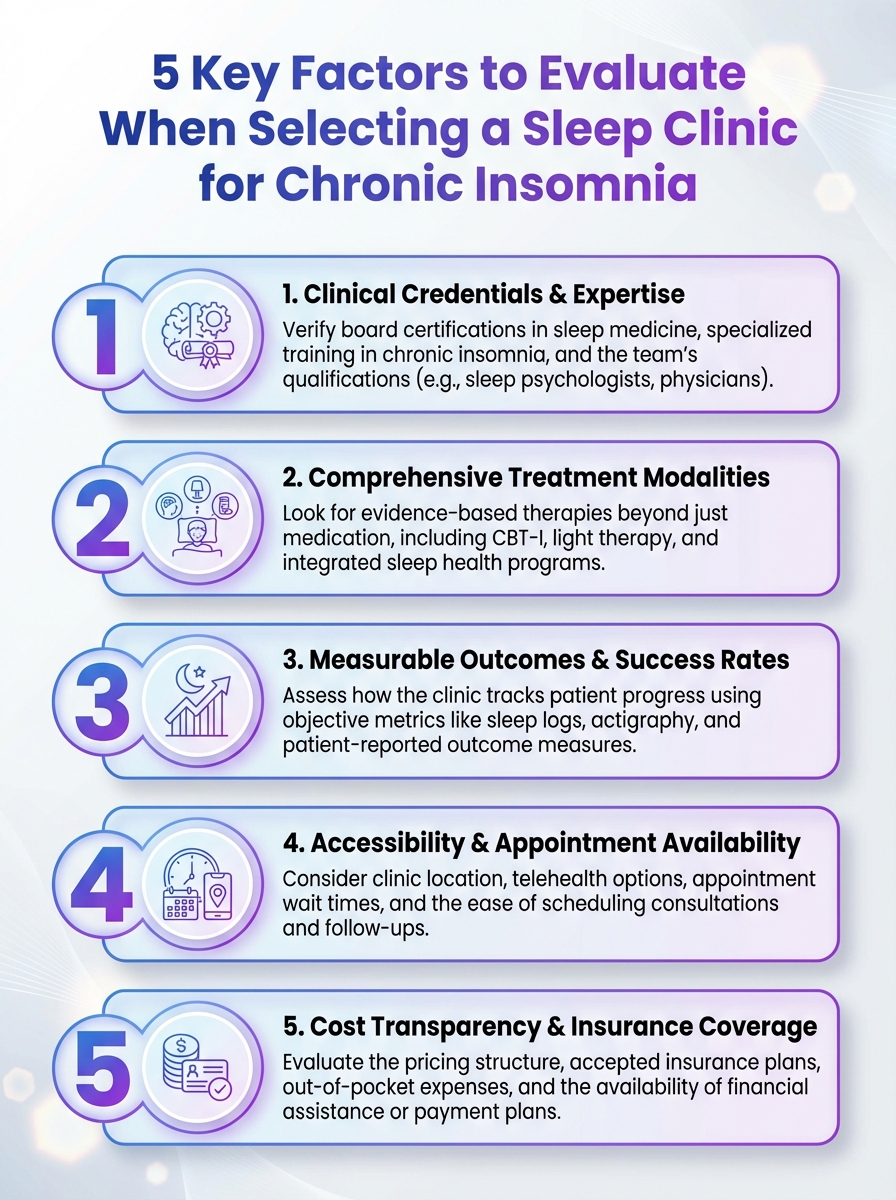
Below is a quick visual guide to help you compare key factors when choosing among professional insomnia clinics.
A quick visual guide to choosing a sleep clinic for chronic insomnia. It highlights five key factors to evaluate.
4. Using National Directories To Find Top Clinics Near You
Most patients and referring physicians now start their search with large, curated directories of accredited sleep centers. In 2026, a practical example is SleepClinics.info, which organizes clinics by state and city so you can quickly focus on your region. These directories list which clinics treat chronic insomnia, sleep apnea, narcolepsy, and related disorders, and often summarize accreditation or physician specialties. We encourage patients to look specifically for entries that mention insomnia programs, behavioral sleep medicine, or CBT‑I, not just diagnostic testing for apnea. Some directories also indicate whether a clinic offers home testing, telehealth follow up, pediatric services, or multidisciplinary care. This level of detail helps you match a clinic’s services with your needs and travel constraints.Did You Know?
Digital CBT-I outperformed medication therapy for insomnia at 6-month follow-up in a real-world cohort of 4,052 patients, highlighting why modern sleep clinics are building robust CBT-I programs.
5. California: A Hub Of Professional Sleep Clinics For Insomnia
Statewide View: Sleep Clinics In California
California currently lists over 100 accredited sleep disorder centers that cover insomnia, apnea, and other conditions. You can see an overview of these options, including 14 cities and 111 total clinics, on the California sleep clinics page. Many of these centers are located inside larger health systems or university hospitals, which often have specialized insomnia and CBT‑I programs. Others are independent sleep medicine practices that provide focused behavioral and medical care for chronic insomnia.Urban Focus: Los Angeles And San Francisco Bay Area
The Los Angeles sleep clinics listing alone includes 34 clinics, illustrating how dense insomnia resources can be in a single metropolitan area. These clinics typically provide lab and home testing, physician consultations, and access to behavioral sleep specialists for CBT‑I. In Northern California, the San Francisco Bay Area clinics directory lists 26 centers serving patients from San Francisco to Silicon Valley and surrounding communities. Bay Area clinics often combine on‑site visits with telehealth, which is especially helpful for technology‑savvy patients who prefer flexible scheduling.Regional Access: Sacramento, San Diego, And Fresno
Professional care is not limited to California’s coastal hubs in 2026. The Sacramento clinics page shows 10 or more clinics, many of which provide formal insomnia assessments and treatment plans. Further south, the San Diego sleep clinics listing includes accredited centers that “seek patients for sleep disorders,” including chronic insomnia. For patients in the Central Valley, the Fresno sleep clinics directory highlights regional treatment centers so you do not have to travel to Los Angeles or San Francisco for care.6. New York State And New York City: High‑Density Insomnia Care
Statewide Options In New York
New York State maintains a large network of accredited sleep centers spanning urban, suburban, and rural communities. The New York sleep clinics overview page organizes these centers by region so you can quickly locate a nearby program that treats chronic insomnia. Statewide directories like this are useful for patients who may need to balance access to insomnia specialists with travel distance and wait times. They also help referring providers identify appropriate centers for complex patients with multiple sleep or medical disorders.New York City: 54 Professional Sleep Clinics In One Metro
In 2026, New York City stands out as one of the most densely served metros for insomnia and other sleep disorders. The New York City clinics listing features 54 clinics, each with its own mix of diagnostic testing, medical management, and behavioral therapies like CBT‑I. Large academic centers in NYC often house multidisciplinary insomnia programs with psychologists, psychiatrists, and sleep physicians working together. Smaller specialized practices may offer highly personalized, non‑pharmacological insomnia treatment plans with shorter wait lists.| Region | Example Listing | Typical Insomnia Services |
|---|---|---|
| California (statewide) | California Sleep Clinics | Diagnostic testing, physician consults, CBT‑I programs |
| Los Angeles | 34 LA clinics | Insomnia evaluation, lab and home studies, behavioral treatment |
| New York City | 54 NYC clinics | Comprehensive insomnia programs, CBT‑I, telehealth follow up |
7. What Sets “Top” Professional Sleep Clinics Apart For Insomnia
Not every sleep lab that can perform an overnight study is equally strong at treating chronic insomnia. We advise patients to look for several specific markers when evaluating clinics in 2026.- Clear focus on insomnia in their service descriptions, not only sleep apnea.
- Access to CBT‑I, either on‑site or through trusted digital and telehealth partners.
- Accreditation by recognized bodies and board‑certified sleep medicine physicians.
- Collaborative care with mental health, primary care, and other specialties when needed.
- Transparent pathways for assessment, testing, follow up, and discharge.
Did You Know?
Across formats, 70–80% of CBT-I patients respond to treatment, and around 40% achieve remission, giving top insomnia clinics clear benchmarks for successful care.
8. Access, Insurance, And Waiting Times For Insomnia Clinics
In 2026, demand for insomnia care continues to exceed the number of clinicians formally trained in CBT‑I. That is why many top clinics blend in‑person visits with digital CBT‑I, group sessions, and nursing or coaching support to increase capacity. Insurance coverage varies by region and plan, but medical consultations and sleep studies are often covered when ordered by a physician. Behavioral treatments like CBT‑I may be billed as mental health services, which can affect co‑pays and provider networks. We encourage you to contact the clinic and your insurer before starting treatment so you understand potential costs. Some clinics partner with employers or health systems to offer digital CBT‑I at low or no cost, which can shorten waiting times for care.For most patients, the cost of a structured insomnia program is outweighed by the long‑term benefits in health, safety, and productivity once sleep stabilizes.
9. How To Prepare For Your First Visit To A Sleep Clinic
A little preparation makes your first clinic appointment more productive. We recommend keeping a simple sleep diary for one or two weeks before your visit, noting bedtimes, wake times, nighttime awakenings, and naps. Bring a list of medications and supplements, including over‑the‑counter sleep aids and caffeine intake. Information about your medical history, mental health, and any previous sleep testing helps your clinician build a more accurate picture. It is also useful to think about your goals, such as falling asleep within 20 to 30 minutes, reducing awakenings, or waking with more energy. Top clinics in 2026 tailor CBT‑I and other interventions around these personal goals, not just around questionnaire scores.| What To Bring | Why It Matters |
|---|---|
| 2‑week sleep diary | Shows patterns that guide CBT‑I planning. |
| Medication and supplement list | Helps identify substances affecting sleep. |
| Past test results (if any) | Prevents duplicate testing and clarifies diagnosis. |
| Personal sleep goals | Aligns treatment with what matters most to you. |
10. Questions To Ask When Choosing A Sleep Clinic For Insomnia
We encourage patients to treat the first consultation as a two‑way conversation. The right clinic will welcome your questions and explain their approach clearly. Here are practical questions you can ask in 2026 when comparing clinics for chronic insomnia care:- “How often do you treat chronic insomnia, and what is your usual treatment pathway?”
- “Do you offer CBT‑I on‑site, through telehealth, or via digital programs?”
- “Who will I see for follow up, and how frequently will we meet?”
- “How do you coordinate with my family physician or mental health provider?”
- “What outcomes should I reasonably expect over the next 3 to 6 months?”